
Nearly 2,000 children were suspended (sent home from school for a fixed period of time) ten or more times in the first term of last year, according to new analysis from The Difference, published today as the Department for Education releases its latest suspensions data. In Spring Term (the second term of last year), 1,100 children were repeatedly suspended.
The number of children losing learning to repeat suspension has doubled in two years, with the steepest rises among the youngest: suspensions of 5- and 6-year-olds suspended six or more times in a single term has risen 69% in two years, reaching its highest level since records began. And today’s data shows that primary repeat suspensions rose even faster in the second term of last year: an 88% rise.
Repeat suspension is concentrated among children already facing the hardest circumstances: those living in poverty, with special educational needs, or known to social services because their lives are unsafe. These children go on to feed the NEET crisis: recent research by the Education Policy Institute shows pupils suspended even once are twice as likely to be out of education, employment or training (NEET) by age 24.
The Difference works with school leaders across the country to reduce the numbers of children ending up out of lessons. Many schools, like Alderman Jacobs Primary School and Percy Main Primary School in the case studies below, are setting up “inclusion bases” to deal with the challenge, as a hub of support for children struggling across the school. The white paper set out plans for all schools to follow suit in setting up bases.
“Today’s saddening data follows the patterns of the past few years: it’s children facing the hardest time of their lives who are being sent out of lessons most often. Children living in poverty, with special educational needs or unsafe home lives. No headteacher wants to use suspension – it is often a last resort. But The Difference charity is privileged to work with school leaders up and down the country who are trying to change the data picture in their schools, and what happens to children in crisis, who need school the most. This year our Inclusive Leadership Course helped 200 school leaders to set a strategy across their school, set up inclusion bases and plan the professional training that their staff need to be more confident in noticing children struggling, earlier, and getting the right support to them.”
Kiran Gill, Founder & CEO, The Difference
The Difference’s Inclusive Leadership Course supports school leaders to define and measure inclusion, and plan school-wide training that reduces the numbers of children being suspended or out of class in other ways. Applications for next year’s course are open now.
What the new analysis shows
- Nearly 2,000 children were suspended ten or more times in a single autumn term in 2023/24 – a rise of 448% since 2016/17, and a 106% rise in the last two years. In Spring Term (the second term of last year), over 1,100 children were repeatedly suspended.
- 590 primary-age children were suspended six or more times in autumn term – sent home roughly once a week. That number has risen 69% in two years, and is at the highest it’s been since records began in 2016/17. Suspensions for this group rose faster in spring 2023/24 than autumn term in the same year, suggesting that the primary crisis is accelerating.
- Suspensions are shorter on average – but more frequent. The average suspended pupil is now sent home 1.90 times a year, up from 1.57 in 2016/17 (+21%). As a result, the average pupil suspended loses more days of learning now than eight years ago, not fewer
- Across all schools, persistent disruptive behaviour remains the most common reason for suspensions. (The Department for Education this year issued new information to schools, asking for schools to consider keeping children in school for all but the most serious reasons for suspension, rather than sending them home. They cited safeguarding concerns through online harm as well as lost learning as reasons.)
- Children aged 5 and 6 are seeing the fastest percentage increase in suspensions of any age group. Between autumn 2022/23 and autumn 2024/25, suspensions of 5-year-olds rose 62% and suspensions of 6-year olds rose 64%. In absolute terms, 7,106 children under six were suspended in autumn term 2024/25.
- Nearly half of all suspensions of five-year olds in autumn 2025/25 are repeat suspensions, i.e. the same child being sent home again and again.
The most vulnerable children losing the most learning
- Children in poverty: Children eligible for Free School Meals are 4.6 times more likely to be suspended than their non-eligible peers, and account for 61% of all suspensions – despite being 25% of the school population
- Children with SEND: Children with special educational needs but without an EHCP are 4.5x more likely to be suspended than their non-SEN peers
- Children interacting with social services: Children interacting with social services had repeat suspensions at 32 times the rate they appear in the general population, accounting for 16% of repeat suspensions
- Children experiencing racism: Children with Black Caribbean or Romani (Gypsy) and Roma heritage disproportionately experience suspension – Romani/Gypsy/Roma children are 3.8x more likely to be excluded; Irish Traveller children 2.9 times more likely; children with mixed Black and white Caribbean heritage 1.8 times more likely.
What can be done?
The Difference works with school leaders across the country to change this picture. Our Inclusive Leadership Course helps headteachers build whole-school inclusion strategies – equipping staff to notice who is struggling earlier and get the right support to them sooner, before suspension becomes the only option. This year, over 200 school leaders are taking part.
Kathryn Thompson, Percy Main Primary, North Shields
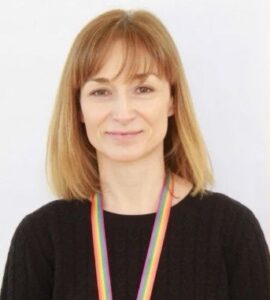
Kathryn Thompson is the Headteacher at Percy Main Primary School in North Shields. Kathryn completed The Difference’s Inclusive Leadership Course during the 2023/2024 academic year.
“The Difference’s Inclusive Leadership Course has been transformational in building staff expertise and embedding a whole-school approach to inclusion. Staff have fully embraced inclusive, relational practice – using every interaction as an intervention and embedding restorative approaches school-wide.
“As a result, we’ve had no permanent exclusions and only a 1 day suspension in three years. These changes aren’t easily won: families locally are struggling, with 60% of pupils eligible for free school meals, more than double the national average, but working collaboratively with parents we’ve improved attendance to be inline with the national average. Last year, 72% of children met the expected standard in reading – showing inclusion and standards aren’t a trade off.”
Kathryn Thompson, Headteacher – Inclusive Leadership Course alumna
Martin Fry, Alderman Jacobs Primary

Martin Fry, headteacher of Alderman Jacobs primary school completed The Difference’s Inclusive Leadership Course in 2024, as he was resetting his internal alternative provision for children with particularly difficult behaviour. Children using this provision were often suspended but, using strategies and research from the Inclusive Leadership Course, these children were offered greater support with their peers in the classroom and tailored experiences like Forest School and emotional literacy sessions to help build confidence and belonging in school.
“By the end of the year… four out of the six children who had previously refused to engage with core learning were participating in lessons… and achieving outcomes which we would not have dared to have imagined in September! Suspensions have fallen across the school, at a time when we know they’re rising across the country.”
Martin Fry, Headteacher – Inclusive Leadership Course alumna
Join 200+ school leaders doing the work
Applications for next year’s Inclusive Leadership Course are open now. If you’re a headteacher or senior leader looking to build a whole-school approach to inclusion – and change the data picture in your school – we’d love to hear from you.
Methodology and data sources
Data source: Department for Education, Suspensions and Permanent Exclusions in England (September 2025 publication). This is an Official Statistics release published on the DfE Explore Education Statistics platform, collected through the statutory school census. Coverage: all state-funded schools in England, including primary, secondary, special and alternative provision. The dataset covers academic years 2016/17 to 2024/25.
Time period: where year-on-year comparisons are made, we use autumn term data throughout for consistency, as 2024/25 full-year data is not yet published. Spring term comparisons use spring-to-spring figures from the same release. Where full-year figures are cited, these are the sum of three termly figures.
Note on the NEET statistic: the finding that pupils suspended even once are twice as likely to be NEET by age 24 is drawn from research by the Education Policy Institute, not from The Difference’s own analysis.
For press enquiries or case studies, contact kiran@the-difference.com